Horizontal Directional Drilling (HDD) has revolutionized underground utility installation. Unlike traditional open-cut trenching, HDD allows contractors to install pipelines, conduits, and cables beneath roads, railways, waterways, and developed properties with minimal surface disruption. However, successful HDD operations depend on having the right utilities and equipment in place. In this guide, we break down every essential utility required for a safe, efficient, and accurate HDD project.
1. The Horizontal Directional Drilling Rig
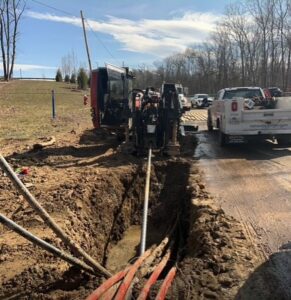
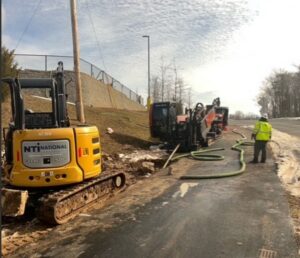
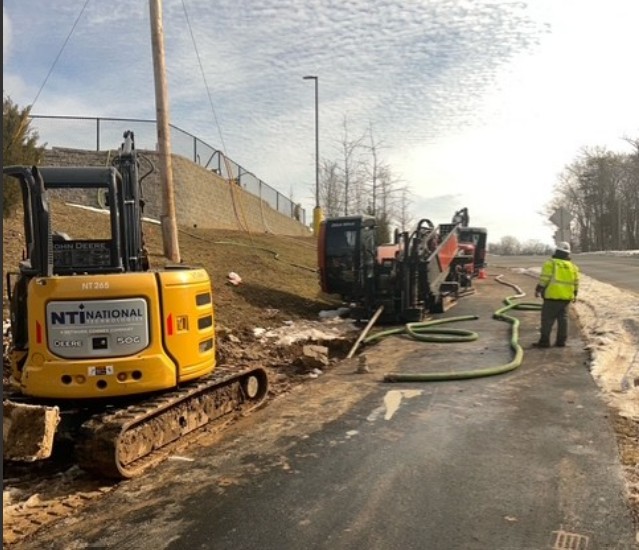
The HDD rig is the centerpiece of any directional drilling operation. These machines provide the thrust, pullback force, and rotational torque needed to bore through soil and rock while steering the drill head along a pre-planned path. HDD rigs come in a wide range of sizes — from compact units rated at 10,000 pounds of pullback force for small fiber optic and utility crossings, to large maxi-rigs exceeding 500,000 pounds for major pipeline installations spanning thousands of feet.
Choosing the right rig depends on several factors: the diameter and length of the product pipe or conduit being installed, the soil conditions (clay, sand, rock, or mixed geology), the required depth of the bore, and site access constraints. At Hardline Communications LLC, we maintain a fleet of HDD rigs sized for municipal, commercial, and telecommunications infrastructure projects — ensuring the right machine for every job.
2. Drill Pipe and Downhole Tooling
The drill pipe is what connects the rig to the drill bit. Each section of drill pipe threads together to form the drill string. Modern HDD drill pipe is made from high-strength alloy steel, designed to withstand immense torsional stress and bending forces as it navigates underground arcs. The drill string simultaneously rotates and advances, with drilling fluid pumped through its hollow center to cool the bit, lubricate the bore path, and carry cuttings back to the surface.
At the front of the drill string sits the bottom hole assembly (BHA), which typically includes the drill bit, a mud motor (for rock formations), and a bent sub or steering housing that allows the operator to control the direction of the bore. Behind the BHA, a non-magnetic drill collar houses the steering tool electronics, which transmit real-time position data back to the surface.
3. Drilling Fluid (Mud) System
The drilling fluid system is one of the most critical — and often overlooked — utilities on an HDD jobsite. Drilling fluid, commonly called drilling mud, serves four essential functions:
- Borehole stabilization: The fluid creates a filter cake on the borehole wall that prevents collapse in loose or unconsolidated soils.
- Cuttings transport: Fluid velocity carries excavated soil and rock cuttings out of the borehole, preventing the drill string from getting stuck.
- Cooling and lubrication: The fluid cools the drill bit and downhole electronics while reducing friction along the drill string.
- Hydraulic power: In rock conditions, pressurized fluid drives the mud motor, which rotates the bit independently of the drill string.
A complete mud system includes a high-volume mixing unit, a holding tank, high-pressure pumps, and a recycling or cleaning system that separates cuttings from the fluid so it can be reused. Bentonite clay is the most common base material, often mixed with polymers and additives tailored to the specific ground conditions.
4. Electronic Locating and Tracking Equipment
Precision is the defining characteristic of HDD, and that precision comes from the locating system. A sonde or beacon housed in the steering tool behind the drill head transmits its position (depth, pitch, roll, and heading) to a handheld receiver or walkover system on the surface. The locator operator walks above the bore path, tracking the signal and communicating with the drill operator to make real-time steering adjustments.
For deeper bores, or where surface access is restricted (under rivers, highways, or environmentally sensitive areas), a wireline steering system is used. This system sends data through a cable inside the drill pipe to a surface computer, providing continuous position updates without requiring walkover access. Both systems rely on electromagnetic or gyroscopic technology to ensure the bore stays within design tolerances — often within inches of the planned path over hundreds or thousands of feet.
5. Vacuum Excavation and Potholing Equipment
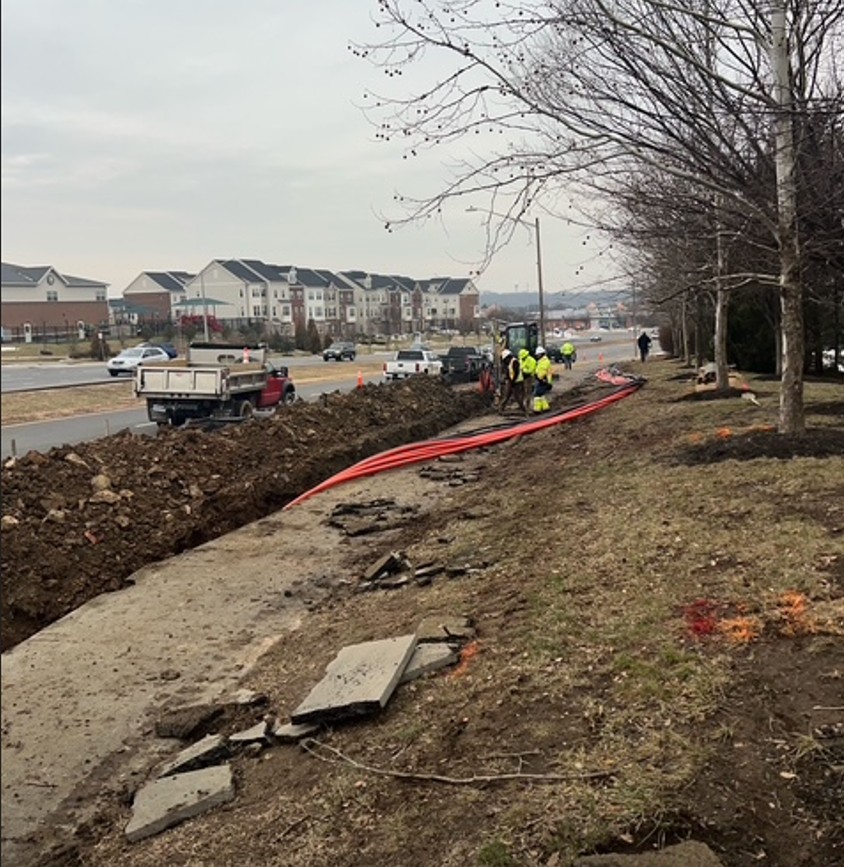
Before any HDD bore begins, the entry and exit pits must be prepared, and existing underground utilities in the area must be located and exposed. Vacuum excavators — also called hydrovacs or suction excavators — use high-pressure water or air to safely break up soil, which is then vacuumed into a debris tank. This process, known as potholing or daylighting, allows crews to physically verify the exact location and depth of existing gas lines, water mains, electrical conduits, and telecommunications cables without risking damage from mechanical excavation.
Vacuum excavation is a standard safety requirement on most HDD projects, and many municipalities and utility owners now mandate it as part of their pre-construction submittal process.
6. Mud Recycling and Containment Systems
Environmental compliance is a top priority on modern HDD jobsites. Drilling fluid must be contained, managed, and disposed of properly. A mud recycling system — typically consisting of shale shakers, desanders, desilters, and centrifuges — separates solid cuttings from the drilling fluid so clean mud can be recirculated back into the bore. This reduces both fluid consumption and waste disposal costs.
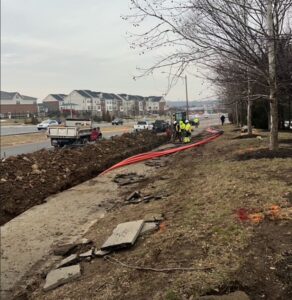
Containment berms, frac tanks, and settling pits are used to manage fluid returns at the entry and exit points, preventing spills and protecting nearby waterways, wetlands, and groundwater.
7. Pipe Fusion and Handling Equipment
For HDD projects involving HDPE (high-density polyethylene) pipe — the most common material for fiber optic conduit, water lines, and gas distribution — butt fusion welding equipment is required to join individual pipe sections into a continuous string before pullback. The fused pipe string is laid out on rollers along the bore alignment to reduce friction and prevent damage during the pullback operation.
Other support utilities include pipe rollers and cradles, lifting equipment (excavators, side-booms, or cranes for larger diameters), and swivels that connect the pullback head to the product pipe, allowing the pipe to rotate freely without twisting during installation.
8. Safety and Site Support Utilities
Safety is non-negotiable on every HDD project. Essential safety equipment includes gas monitors to detect underground utility strikes, PPE (hard hats, high-visibility clothing, steel-toed boots, hearing protection, and safety glasses), traffic control devices for work zones near roadways, emergency shut-off systems on all equipment, and first aid stations. A dedicated safety officer or competent person should be on-site throughout the operation.
Additional site support utilities include generators or auxiliary power units for lighting and equipment, water supply trucks or hydrant connections for mixing drilling fluid and operating hydrovacs, and communication systems (two-way radios or headsets) between the drill operator, locator, and support crew.
Conclusion: The Right Utilities Make the Difference
Horizontal Directional Drilling is a sophisticated construction method that depends on a coordinated suite of equipment, utilities, and skilled personnel. From the drill rig and mud system to the locating electronics and safety gear, every component plays a role in delivering a successful bore — on grade, on alignment, and on schedule.
At Hardline Communications LLC, we bring specialized HDD expertise, modern equipment, and disciplined project execution to every job. Whether you need a single utility crossing, a fiber optic network expansion, or a large-scale municipal infrastructure project, our team has the utilities and the experience to get it done safely and accurately.
Built Below The Surface. Connecting What Matters Above.
Contact us today to discuss your next HDD project.