Introduction
Every day across the United States, utility crews face the same challenge: how do you install critical infrastructure beneath roads, railways, waterways, and developed properties without bringing everything above ground to a halt?
For decades, the answer was simple — dig a trench. Close the road. Redirect traffic. Tear up landscaping. Accept the disruption as a necessary cost of progress.
That era is ending.
Trenchless construction technology, led by Horizontal Directional Drilling (HDD), has fundamentally changed how utility providers, municipalities, and telecommunications companies approach underground infrastructure projects. What once required weeks of excavation, traffic control, and surface restoration can now be accomplished with surgical precision — often in a fraction of the time and at a fraction of the surface-level cost.
This shift isn’t just about convenience. It’s about building smarter, faster, and more sustainably. It’s about preparing communities for the bandwidth demands of tomorrow without sacrificing the quality of life today.
What Is Horizontal Directional Drilling — And Why Does It Matter?
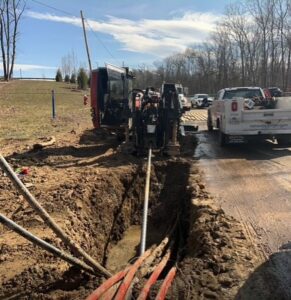
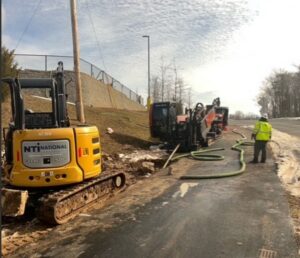
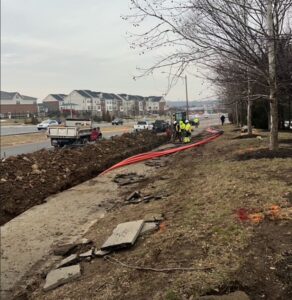
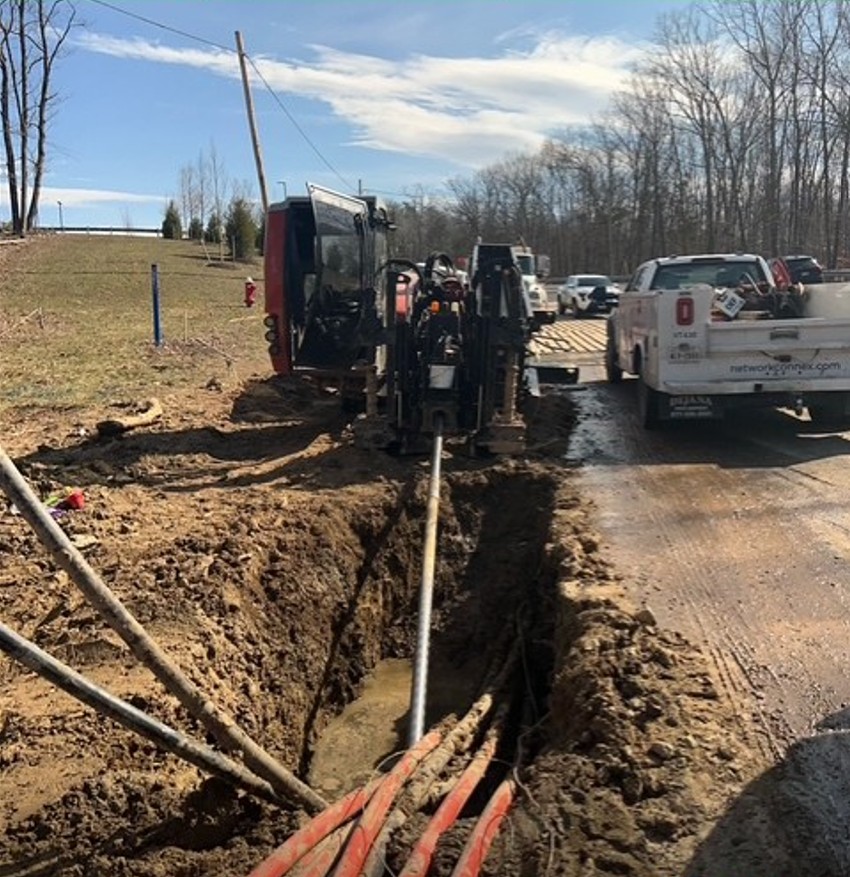
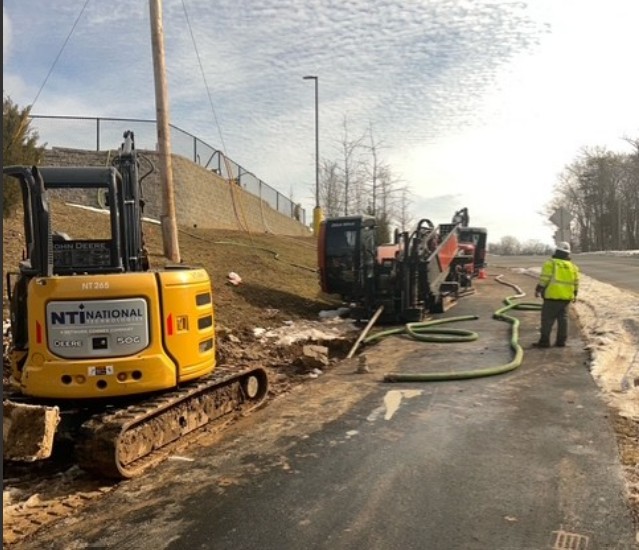
Horizontal Directional Drilling is a trenchless method of installing underground pipes, conduits, and cables along a predetermined bore path using a surface-launched drilling rig. Unlike traditional open-cut excavation, HDD requires only small entry and exit pits — leaving the surface between them largely undisturbed.
The process works in three stages. First, a pilot bore is drilled along the designed path using guidance technology that tracks depth, angle, and direction in real time. Second, the bore is enlarged using a reamer to accommodate the product pipe or conduit. Finally, the utility line — whether fiber optic cable, telecommunications conduit, water pipe, or gas line — is pulled back through the enlarged bore.
The result? A fully installed underground utility crossing beneath highways, parking lots, airport runways, rivers, wetlands, and densely developed commercial properties — all without a single open trench.
For utility providers and municipalities, the implications are significant. HDD reduces surface disruption, shortens project timelines, lowers restoration costs, and helps maintain normal operations in busy commercial and industrial environments. It also minimizes environmental impact, protects existing landscaping and hardscaping, and reduces the risk of damaging adjacent utilities during installation.
The Fiber Optic Imperative
While HDD solves the “how” of underground installation, the “what” has become increasingly clear: fiber optics are the backbone of modern communication infrastructure.
The numbers tell the story. Global internet traffic has grown exponentially year over year, driven by cloud computing, streaming services, remote work, IoT devices, and 5G network rollouts. Traditional copper cabling — the workhorse of the 20th century — simply cannot keep pace with modern bandwidth demands.
Fiber optic cables transmit data using pulses of light rather than electrical signals. This fundamental difference delivers three critical advantages: dramatically higher data transfer rates, significantly longer transmission distances without signal degradation, and immunity to electromagnetic interference that plagues copper infrastructure.
For businesses, government facilities, healthcare organizations, and educational institutions, the shift to fiber isn’t optional — it’s existential. A properly designed fiber optic network supports cloud-based operations, VoIP communications, video conferencing, security systems, wireless access points, and high-speed internet connectivity. Without it, organizations risk falling behind competitors who have already made the investment.
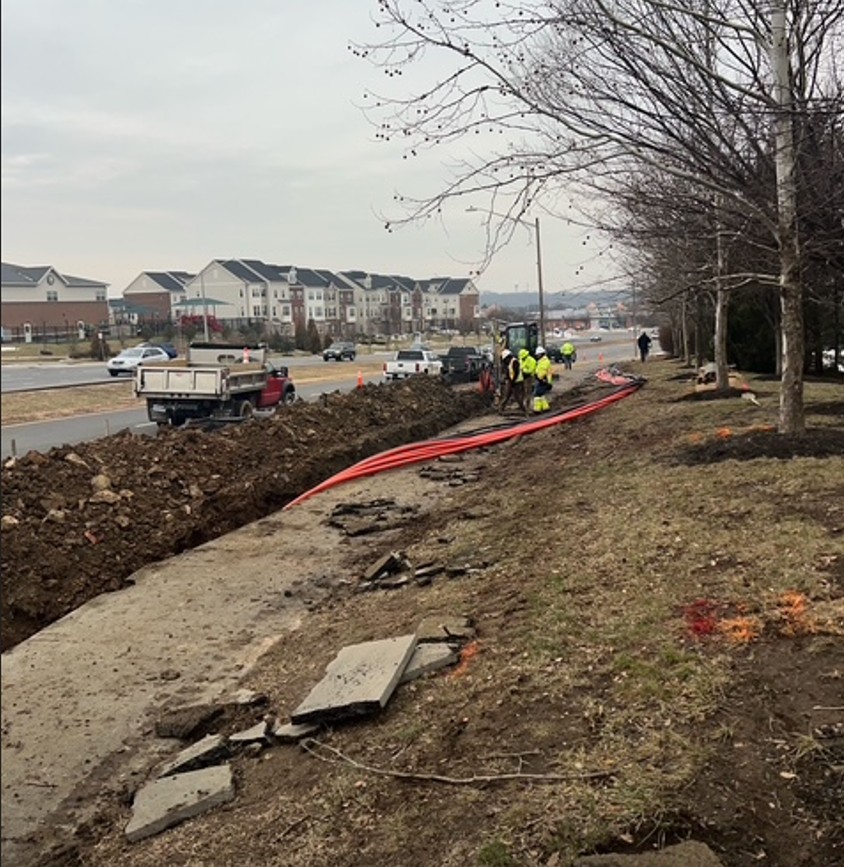
This is where trenchless technology and fiber optics converge. Installing fiber networks underground — particularly in urban and suburban environments — requires navigating a complex maze of existing utilities, roadways, buildings, and environmentally sensitive areas. HDD provides the method. Fiber optics provide the future.
Beyond HDD: The Complete Infrastructure Picture
While Horizontal Directional Drilling captures much of the attention, the underground construction industry relies on a comprehensive ecosystem of services that work together to deliver reliable infrastructure.
Utility construction encompasses the full scope of building and upgrading the physical systems that support telecommunications, broadband, data transmission, and essential services. This includes underground conduit systems, fiber optic pathway construction, cable placement, site preparation, trenching where necessary, and utility relocation.
Utility contractor services extend beyond the physical installation to include project management, planning, coordination with engineers and stakeholders, and compliance with local regulations and industry standards. Experienced contractors manage every phase — from initial site assessment through final testing and certification.
Above ground, aerial build services provide a cost-effective complement to underground installation. By utilizing existing utility poles and overhead pathways, telecommunications providers can deploy fiber and strand lines faster and at lower cost, particularly in rural and suburban areas where underground boring may be impractical or cost-prohibitive.
And at the heart of every fiber optic network lies the precision craft of fiber splicing. Fusion splicing — literally fusing two optical fibers together using an electric arc — creates permanent, low-loss connections that maintain signal integrity across the entire network. Poorly executed splices introduce signal loss, network interruptions, and costly maintenance issues. Properly executed splices are invisible to the end user — they simply work.
Safety: The Non-Negotiable Foundation
In an industry defined by heavy equipment, underground hazards, and overhead work, safety isn’t a checkbox — it’s a culture.
Reputable infrastructure contractors operate under strict safety protocols that include MSHA compliance, OSHA 30 certification, daily job hazard analyses, and continuous crew training. Every project, regardless of size, begins with a safety assessment that identifies risks, establishes controls, and ensures every team member understands their role in maintaining a safe work environment.
This commitment extends beyond the job site. Proper utility locating before any excavation, adherence to one-call regulations, and coordination with existing utility owners help prevent damage to existing infrastructure that could disrupt essential services to homes, businesses, and critical facilities.
The best contractors understand that safety and efficiency are complementary, not competing priorities. A safe job site is an organized job site. An organized job site is a productive one.
The Economic Case for Underground Investment
For municipalities and utility providers evaluating infrastructure investments, trenchless technology offers a compelling economic argument.
Traditional open-cut construction carries hidden costs that extend far beyond the construction contract. Road closures disrupt local businesses. Traffic detours increase vehicle operating costs and emissions. Surface restoration — repaving, relandscaping, repairing damaged sidewalks — adds weeks to project timelines and thousands to project budgets. In dense urban environments, the indirect costs of disruption can exceed the direct costs of construction.
HDD eliminates or dramatically reduces these secondary costs. By boring beneath the surface rather than cutting through it, projects can proceed with minimal impact on traffic flow, business operations, and community life. The savings in time, money, and public goodwill are substantial.
For fiber optic deployments specifically, the long-term economics are equally compelling. Fiber networks have significantly longer operational lifespans than copper alternatives, lower maintenance requirements, and greater scalability for future bandwidth demands. The initial investment in quality fiber infrastructure pays dividends for decades.
Building for Tomorrow, Today
The infrastructure decisions made today will shape America’s economic competitiveness, quality of life, and technological capability for generations.
Communities that invest in robust underground utility infrastructure position themselves to attract businesses that depend on high-speed connectivity. Healthcare systems that deploy fiber backbones can support telemedicine, digital imaging, and electronic health records without bandwidth constraints. Educational institutions with fiber networks can deliver online learning, research collaboration, and administrative services at scale.
The challenge — and the opportunity — lies in executing these installations efficiently, safely, and with minimal disruption to the communities they serve. Trenchless technology, combined with skilled workmanship, rigorous safety standards, and modern project management, makes that possible.
At Hardline Communications LLC, we’ve built our reputation on this principle: the best infrastructure work is the kind you barely notice. When our crews leave a job site, the roads are open, the landscaping is intact, and the businesses are operating normally — but beneath the surface, a new fiber optic backbone, telecommunications conduit, or utility crossing is quietly powering the connectivity that modern life depends on.
Conclusion
The next time you stream a video, join a video conference, or simply browse the internet without a second thought, remember what’s beneath your feet. The infrastructure that makes digital life possible doesn’t happen by accident. It requires planning, precision, expertise, and an unwavering commitment to doing the job right the first time.
Whether you’re a municipality planning a network expansion, a telecommunications provider deploying fiber, or a developer building the next great commercial property, the principles remain the same: choose the right technology, hire the right team, and never compromise on safety or quality.
The underground revolution is already underway. The only question is whether your community is ready to be part of it.
To learn more about Horizontal Directional Drilling, fiber optic installation, utility construction, aerial builds, or fiber splicing services, contact Hardline Communications LLC at 817-797-2608 or visit hardlinecommunications.com.